
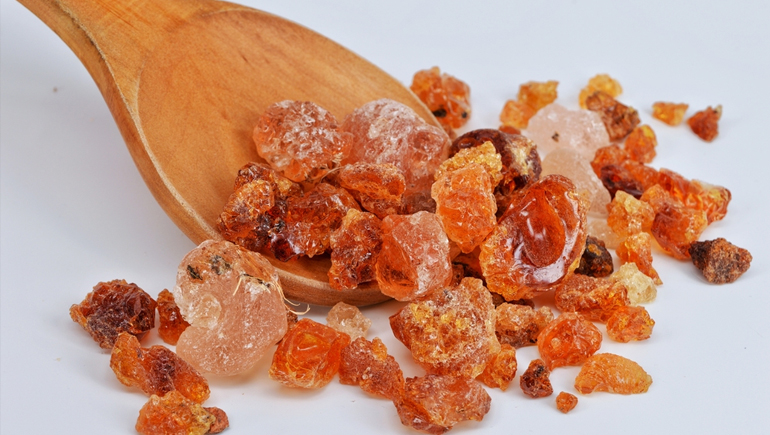
Gum Arabic
Derived from the sap of the African acacia tree, gum arabic is one of the world’s most common gums with the longest history. Also known as gum acacia, it was used in ancient times for purposes as varied as mummification and inks for hieroglyphics. From Source to Resource Today, gum arabic is harvested in the gum belt of Africa, in nations such as Chad, Eritrea, Kenya, Mali, Mauritania, Niger, Nigeria, Senegal, and Sudan. It is then dried or aged for one year before being processed into spray dried powder. Defined as a cold water-soluble polysaccharide, gum arabic is a multi-functional hydrocolloid that features a highly branched arabino-galactan-protein complex.
A superior emulsifier, our Gum Arabic Spray Dry Powder is widely used in the production of beverage and flavor emulsions and meal replacers. Its low viscosity and adhesive properties, meanwhile, make gum arabic an excellent ingredient for coating cereal, confections, and snack foods. For bakery products, the gum’s binding and emulsification abilities aid in the formulation of icings and frostings as well as baked goods like cakes and muffins. Beyond foods and beverages, gum arabic has been long used in lithographic processes and pharmaceutical products.
The Health Benefits of Gum Arabic In addition to its functional properties, gum arabic plays an important dietary role. It is an excellent source of soluble dietary fiber (more than 85% on dry basis) and because of its low viscosity (300 cP maximum in a 1% solution), can be used to boost fiber levels in a food or beverage without drastically altering the finished viscosity. Learn more about the benefits of soluble dietary fiber from gums.

